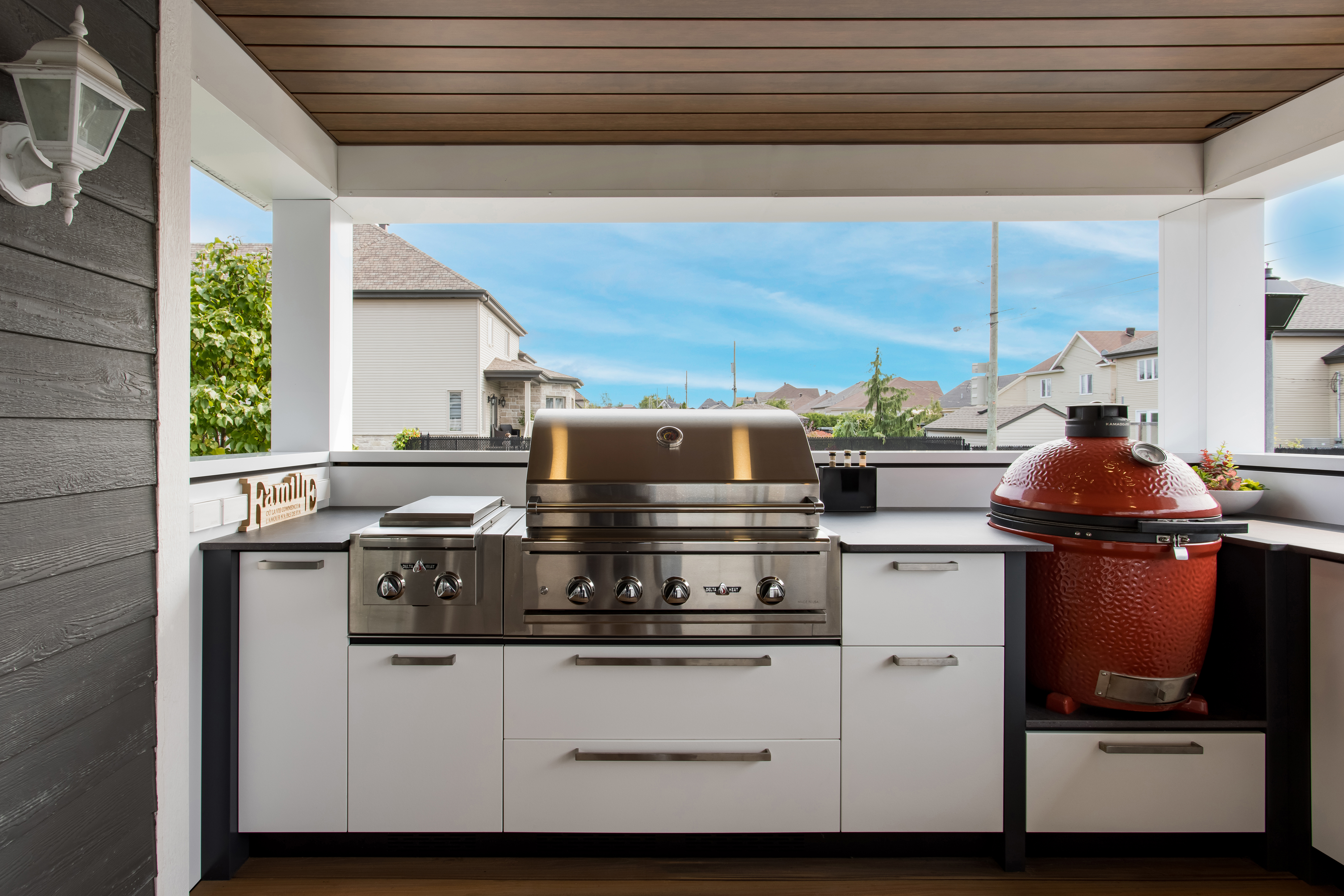
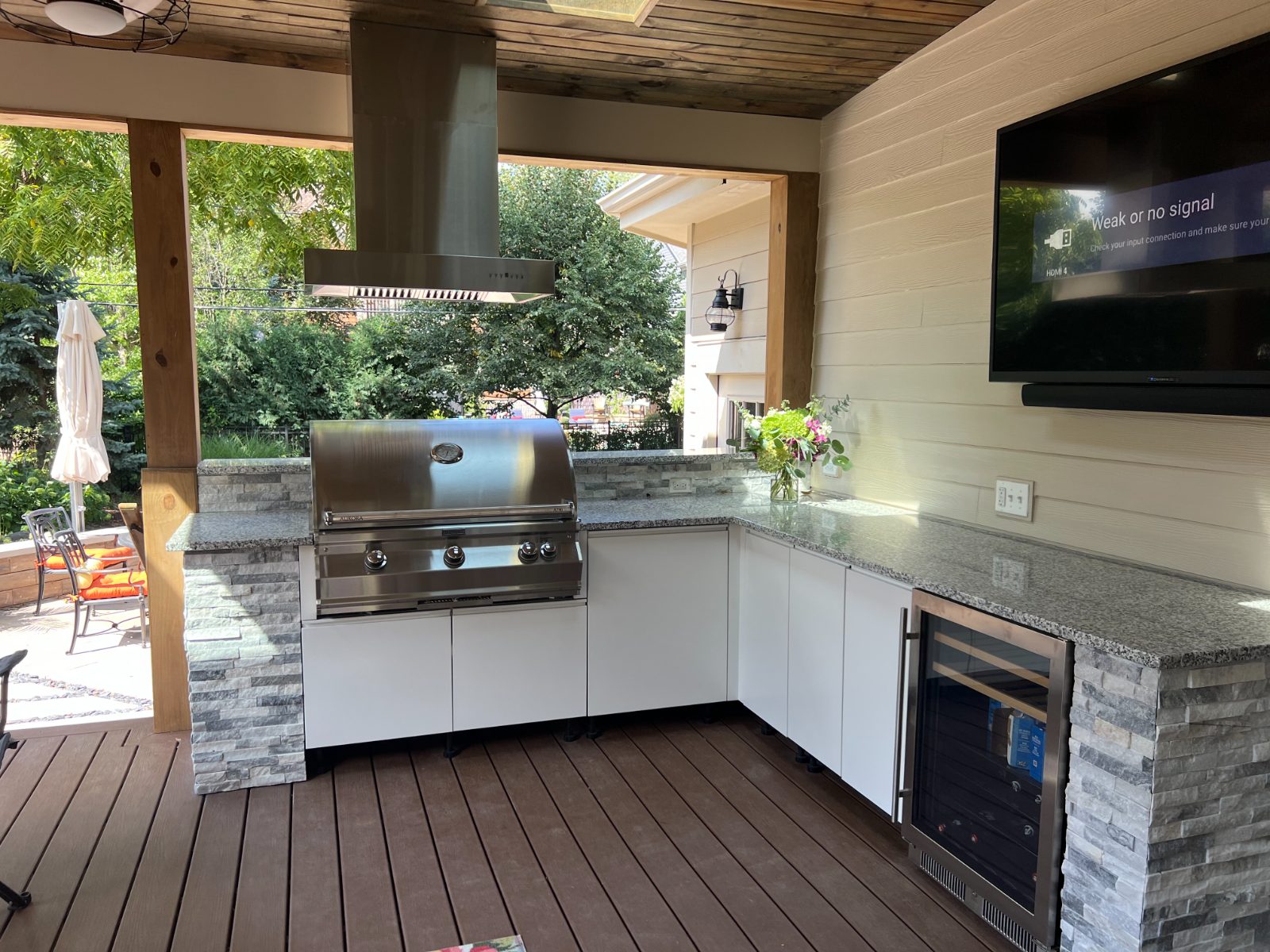
The grill is usually the first thing homeowners think about when they start planning an outdoor kitchen. It is the main cooking appliance and often the largest investment in the space, so it naturally receives a lot of attention during the design process.
The problem is that a kitchen designed only around the grill can become difficult to use. Cooking involves much more than placing food over heat. There is preparation, storage, refrigeration, serving, cleanup, and movement between each part of the kitchen.
Countertop space is one of the most important pieces of that process. The person cooking needs room for ingredients, trays, utensils, and finished food. Without enough working space, even a high-end grill can become frustrating to use.

Storage also plays a major role in how functional the kitchen feels. Drawers, cabinets, trash pullouts, and dedicated storage areas keep the items used outside close to where they are needed. This helps the kitchen operate independently instead of requiring constant trips back into the house.
Refrigeration and beverage storage are equally important. A refrigerator, ice maker, or beverage center can serve both the person cooking and the guests using the space. When these elements are located correctly, they reduce traffic through the cooking zone and make entertaining easier.
Seating is another part of the kitchen that is often overlooked. A bar or counter area gives guests a place to gather without interfering with the cooking process. This allows the person preparing food to remain part of the conversation instead of being separated from everyone else.

Specialty appliances can also expand how the kitchen is used. Pizza ovens, side burners, smokers, and power burners allow homeowners to cook different types of food outside and create experiences that go beyond traditional grilling.
The best outdoor kitchens are designed around the full experience of cooking and entertaining. The grill may be the starting point, but every other element should support how the homeowner plans to use the space.
When the kitchen is planned this way, it becomes more than a place to cook. It becomes a functional part of the outdoor living environment that supports everyday meals, entertaining, and the way people naturally gather outside.