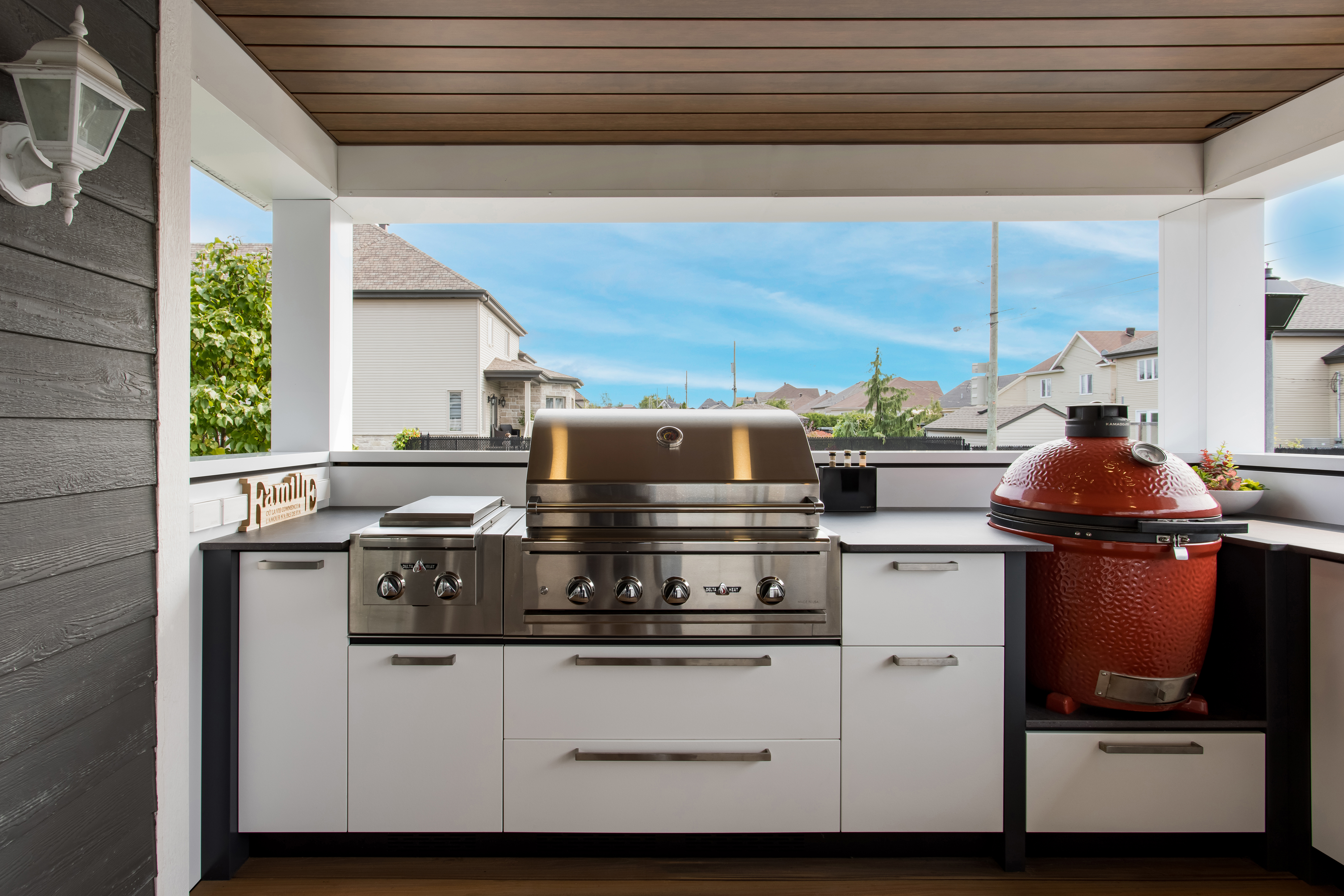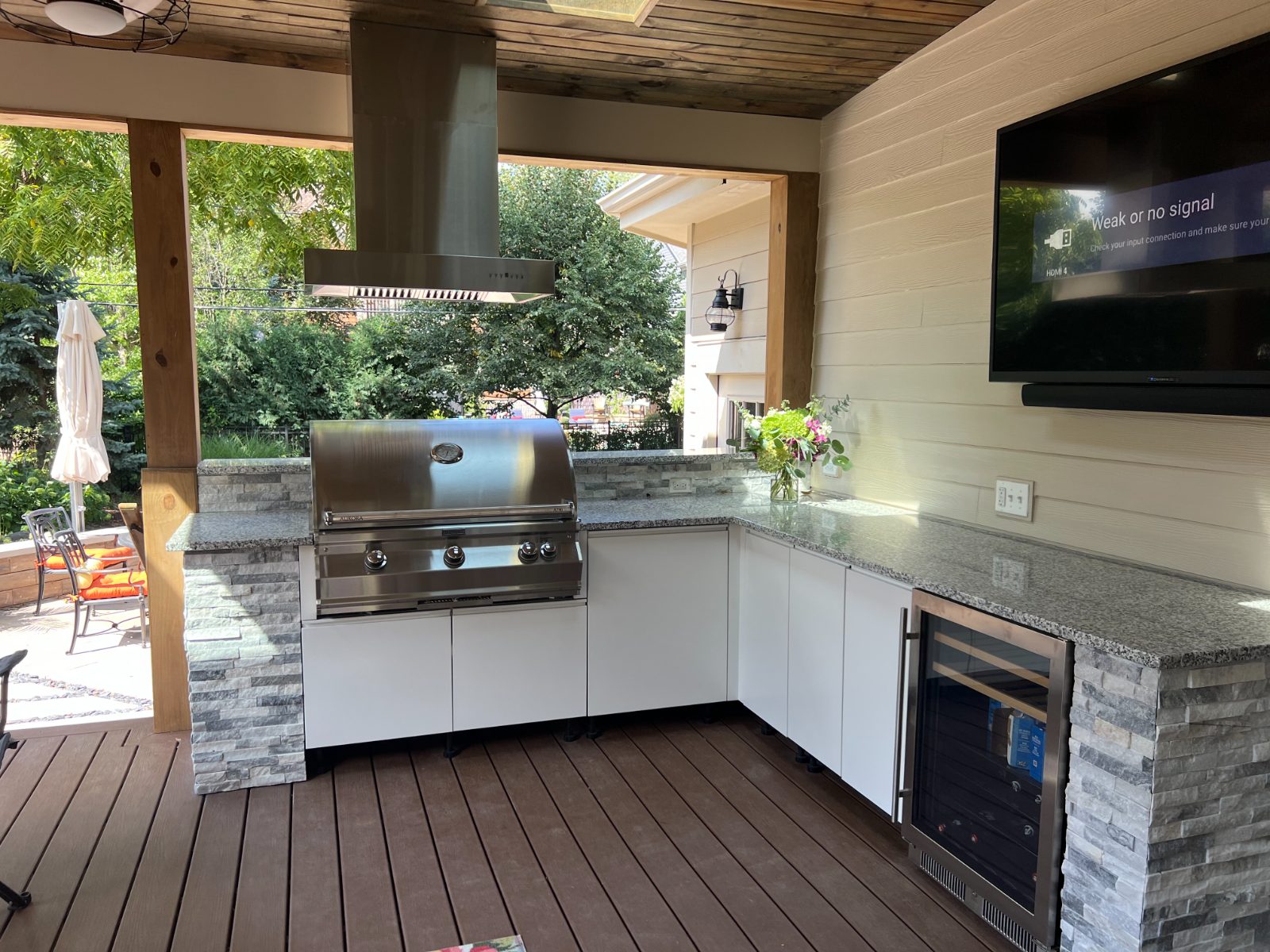
One of the most important areas of an outdoor kitchen isn’t an appliance, a cabinet, or even a cooking feature. It’s an empty countertop section. And while it may not seem particularly exciting during the design process, those few feet of open space can make a tremendous difference in how safely and comfortably your outdoor kitchen functions.
In kitchen design, we call this a landing zone. It’s the countertop space immediately beside a cooking appliance where you can set down food, cookware, utensils, and anything else you’re handling while cooking. At Ground & Table, we like to plan for at least 24 inches of usable landing space beside the grill whenever possible. This practical design target gives you room to work without constantly searching for somewhere to put things.
Think about what happens when you’re grilling. You’re carrying a tray of uncooked food, reaching for seasonings, moving cooked food off the grill, and handling utensils. Without a landing zone, where does everything go? Too often, homeowners balance trays on narrow ledges, use a nearby dining table, or walk back and forth to another counter. A grill may have all the cooking capacity you need, but without adequate countertop space beside it, the experience can become frustrating.

There’s also a safety consideration that many homeowners don’t think about until they’re actually cooking.
A landing zone gives you a place to let go of something immediately. If a pan flares up, a pot is too hot to keep holding, or a tray starts to slip, you need a clear surface right beside you, not a walk across the patio. Those few seconds can be the difference between a minor moment and a burned hand, a dropped dish, or something worse.
Not every inch of countertop should automatically count as usable landing space. A sink, raised bar, countertop appliance, or decorative feature can interrupt the area you actually need for food preparation. We look at how much clear, accessible counter space remains and whether it’s positioned where someone will naturally need it.
The landing zone’s placement also matters. Two feet of countertop on the opposite side of the kitchen isn’t quite the same as having that space right beside the grill. Good kitchen design considers the sequence of preparing, cooking, and serving food. The less you have to reach across hot surfaces or move around other people, the more comfortable and efficient the experience becomes.

This is one reason we encourage homeowners to think beyond simply fitting the largest possible grill into their outdoor kitchen. In a limited space, a slightly smaller grill with enough counter space may serve you better than a larger grill that leaves no room to prep food. The appliance is only one part of the cooking experience. The surrounding space makes it practical.
Twenty-four inches may not sound like much, but when you’re standing in front of a hot grill with a tray in one hand and tongs in the other, you’ll appreciate every inch of it.