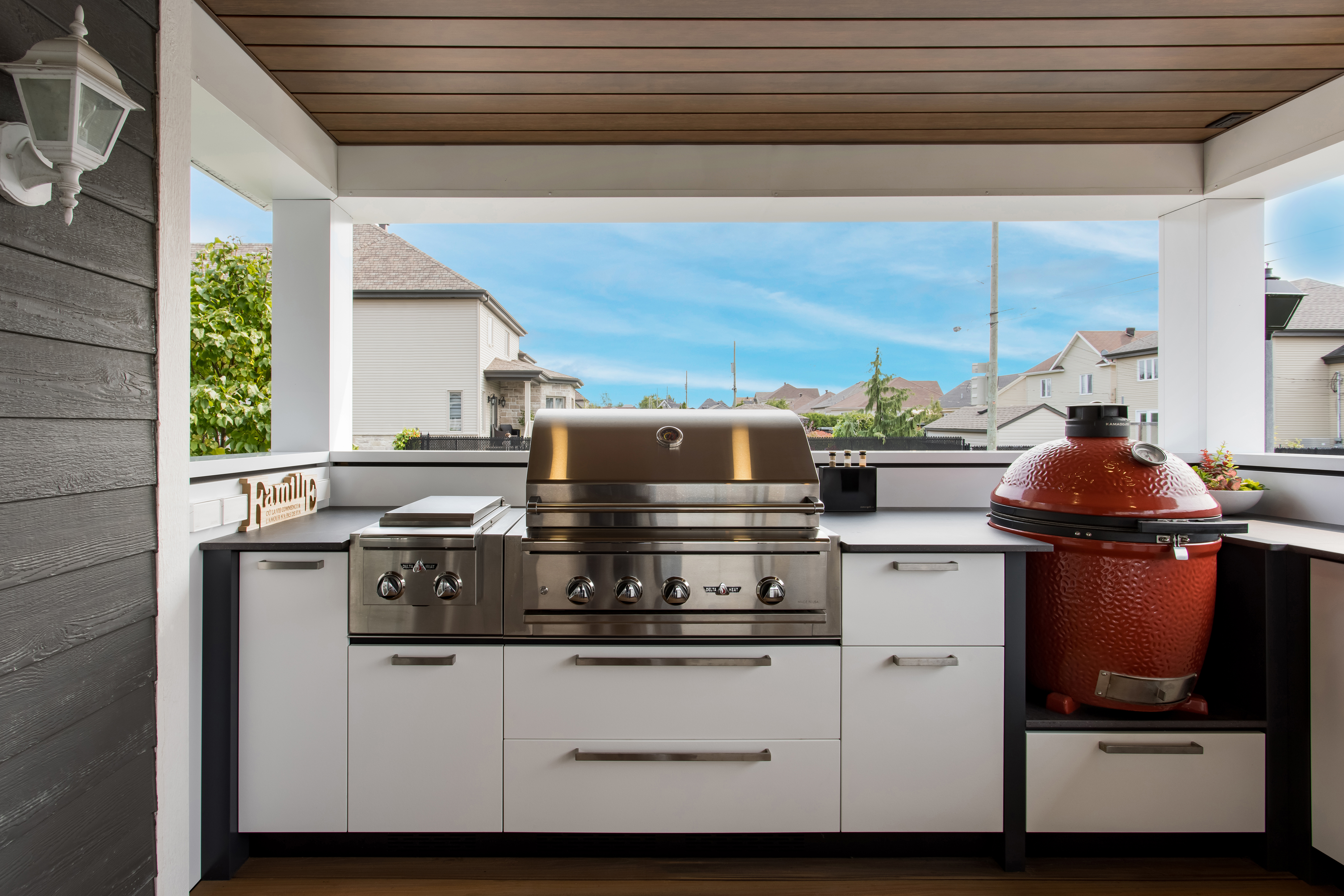
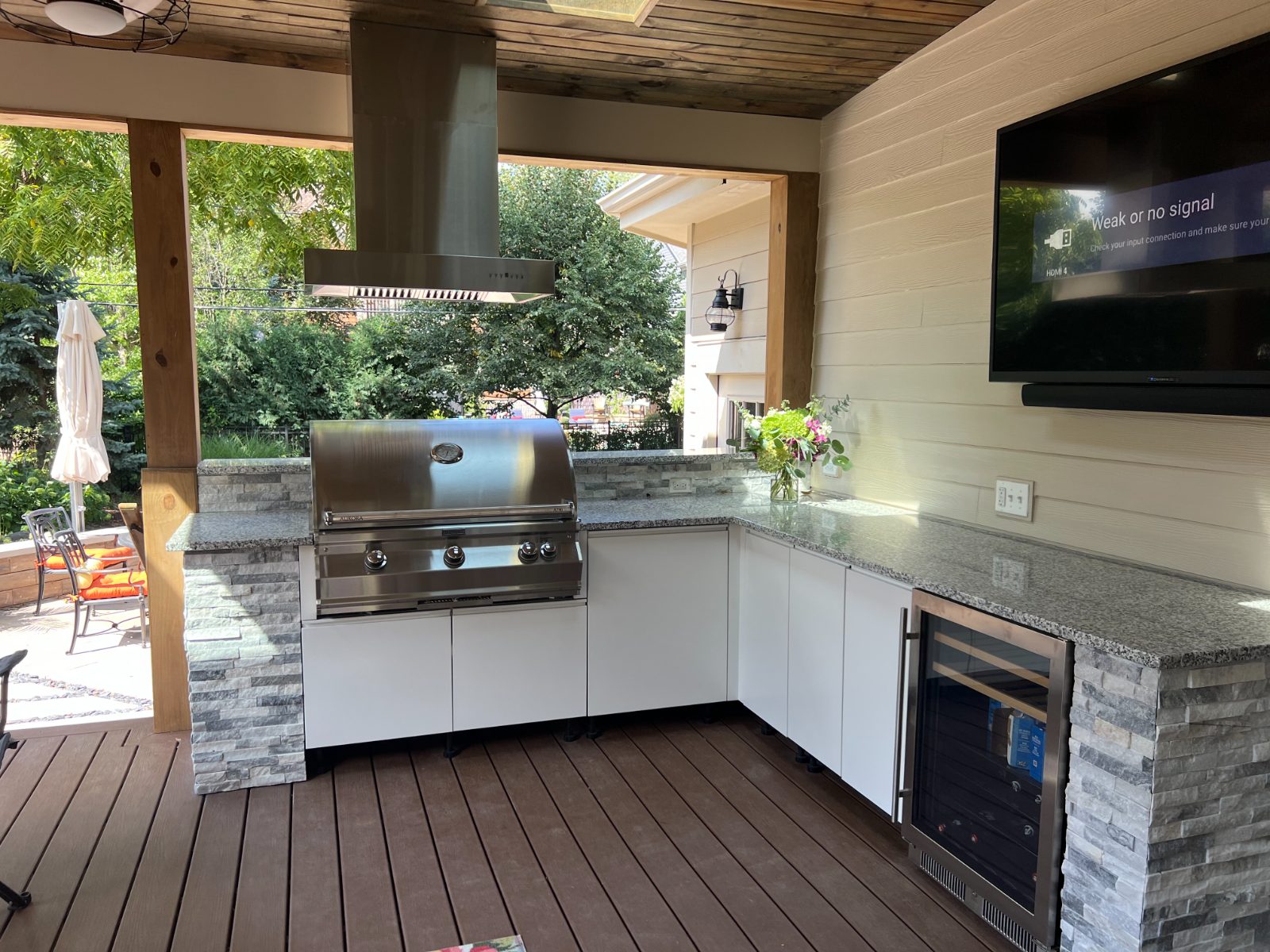
Many outdoor kitchens built years ago were constructed from concrete block, brick, and stone. These systems can be extremely durable, but they were often designed more like permanent structures with appliances inserted into openings than kitchens organized around storage and everyday use.
One of the biggest differences becomes obvious when you look at usable space. A masonry kitchen may be ten or twelve feet long, but a large amount of that footprint can be consumed by block, framing, veneer, and internal voids. The kitchen looks substantial from the outside while providing surprisingly little usable storage inside.

A modern cabinet-based system uses that same linear footage differently. Drawers, shelves, trash storage, refrigeration, and appliance access can occupy space that would otherwise be structural. This is one reason we pay so much attention to usable linear footage when designing an outdoor kitchen. Every cabinet should contribute something to the way the kitchen functions.
Appliance replacement is another issue with older masonry kitchens. Many were constructed around the exact dimensions of a specific grill or refrigerator. Years later, when that appliance needs to be replaced, the opening may no longer match current equipment and the masonry has to be cut or rebuilt. Modular systems can be planned around appliance-specific cabinets and spacers, making the integration much more controlled. Station Grill, for example, offers dedicated grill cabinets, refrigerator spacer systems, Kamado cabinets, and appliance-specific configurations.

Modern outdoor cabinetry has also changed dramatically in terms of durability and appearance. Station Grill uses exterior-oriented materials across its collections, including HDPE and aluminum-composite panel systems, and its current warranty provides fifteen-year parts coverage on cabinets, door and drawer fronts, and NEXBOND finishing panels under the stated warranty conditions.
Replacing an older masonry kitchen is therefore not always about making the space look newer. It can be an opportunity to recover usable space, improve storage, simplify appliance integration, and create an outdoor kitchen that functions much more like the kitchens homeowners are accustomed to using inside the home.