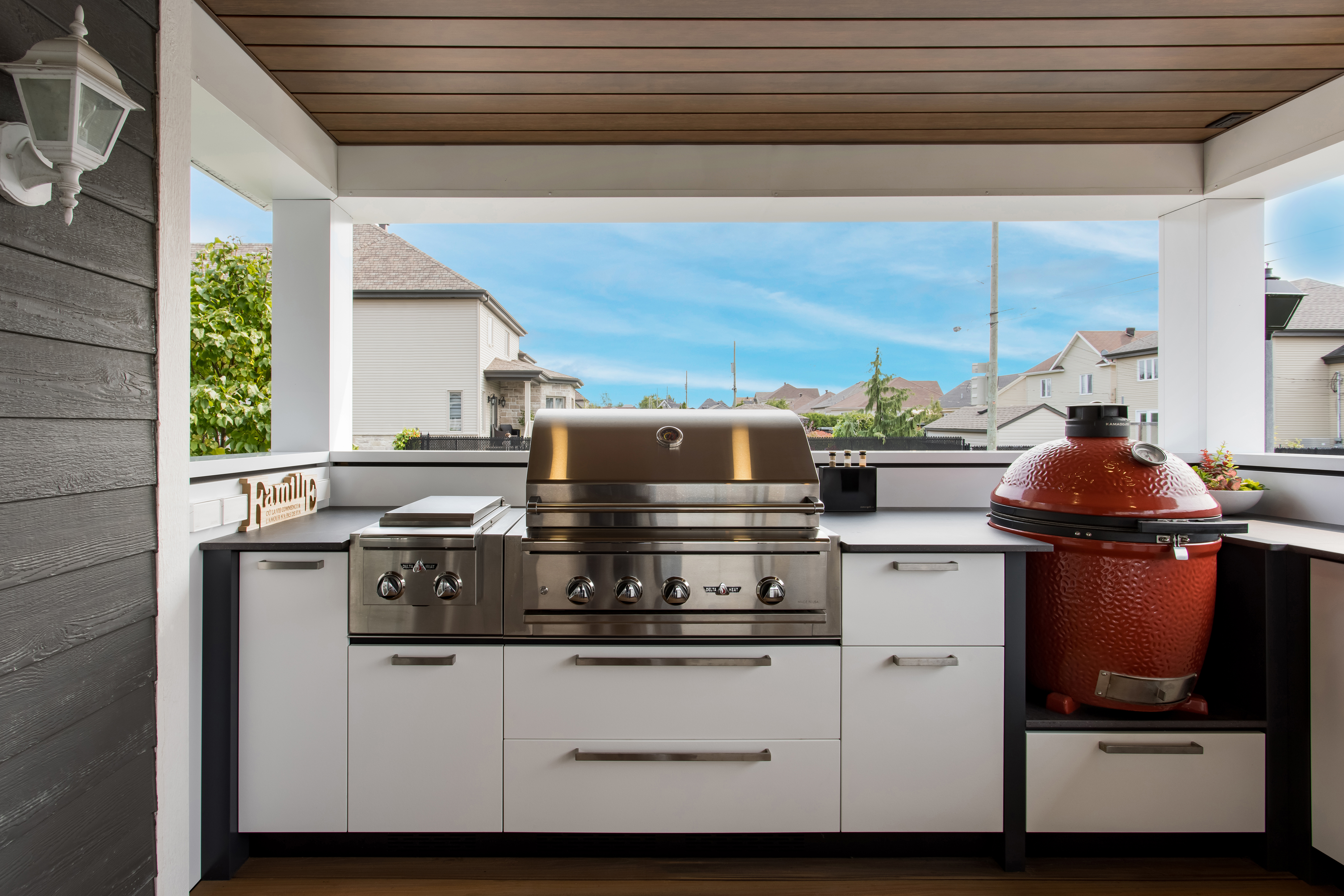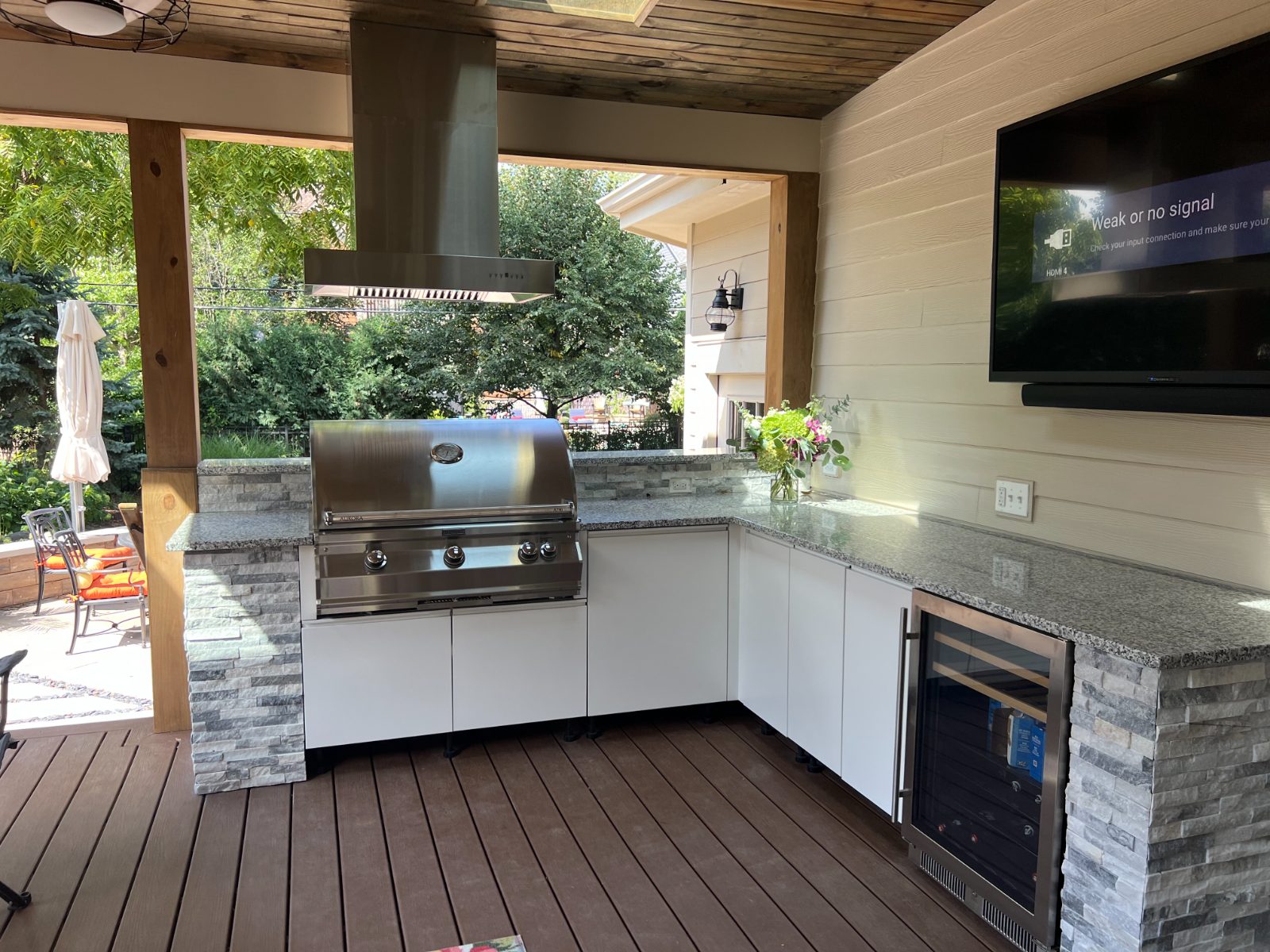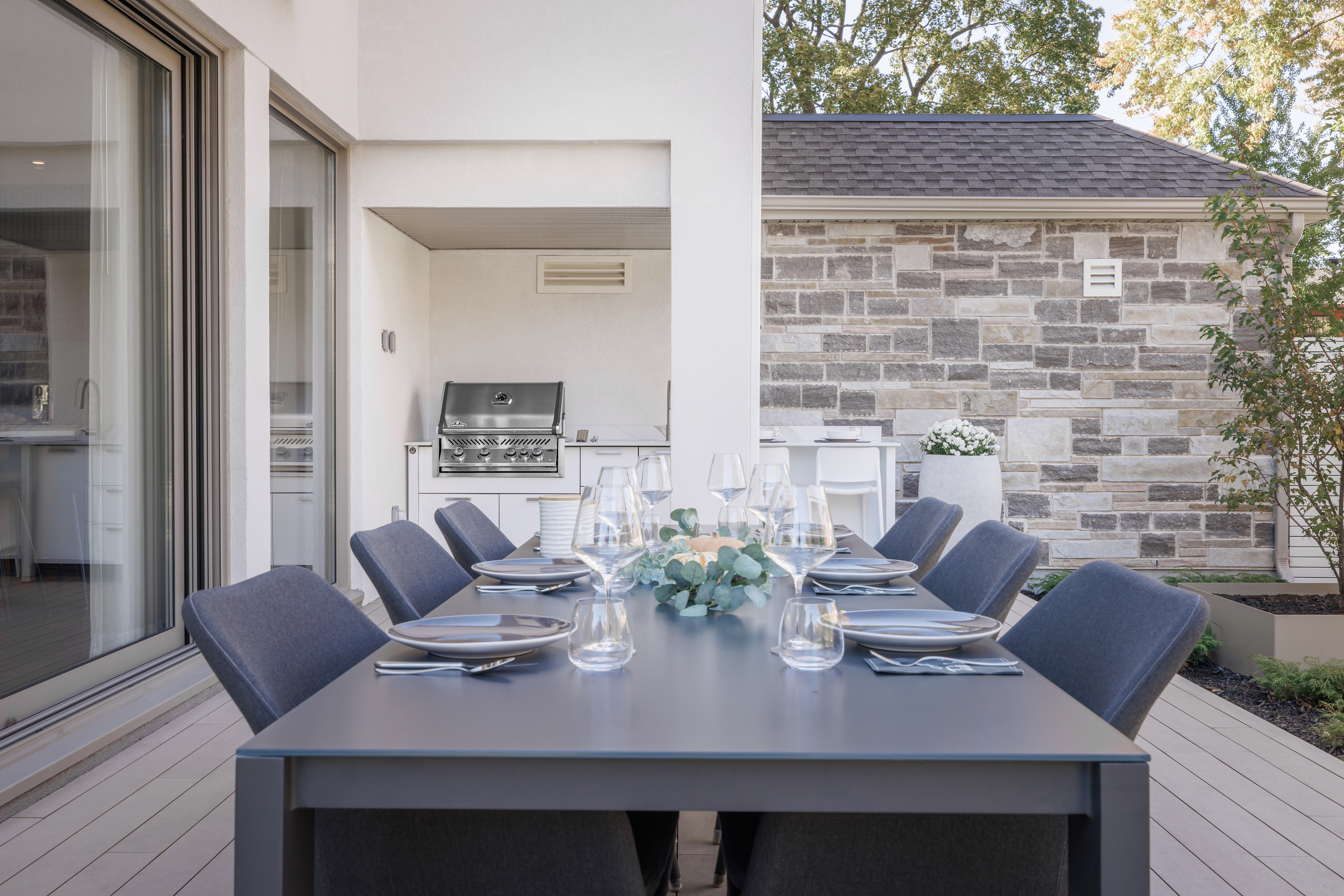
Some of the most interesting outdoor kitchen opportunities are found in areas homeowners originally considered unusable. A corner beside the house, an odd section of patio, or a narrow transition space may seem too awkward for furniture, but that does not mean the area has no value.
The mistake is usually trying to make the space behave like the rest of the patio. A rectangular dining table or traditional furniture arrangement may not work there, but an outdoor kitchen can be designed specifically around the dimensions and geometry of the area.

Cabinet-based systems make these situations much easier to solve because the layout can be assembled around individual functions. Grill cabinets, drawer storage, refrigeration, trash storage, and specialty cooking equipment can be positioned based on what the space allows rather than forcing a large masonry structure into the corner. Station Grill even offers multiple interior-corner configurations and adjustable components that allow the kitchen to respond to the site instead of requiring a perfectly simple layout.
The dimensions still have to be carefully studied. Cabinet depth, appliance clearance, countertop overhangs, circulation, and the direction that doors and drawers open all affect how comfortable the kitchen will feel. In a tight area, losing even a few inches in the wrong place can change whether the space works.

Utilities also have to be considered before the kitchen is installed. Gas, electrical, and water lines need to reach the equipment without creating conflicts with cabinetry or circulation. Good cabinet systems are designed to allow those services to move through the kitchen while remaining accessible for installation and future service. Station Grill’s exterior finishing panels, for example, are specifically designed to help integrate electric, gas, and water lines into the kitchen structure.
When these details are handled correctly, the awkward corner stops feeling like leftover space. It becomes a destination within the backyard and often one of the most active areas of the entire outdoor living environment.